
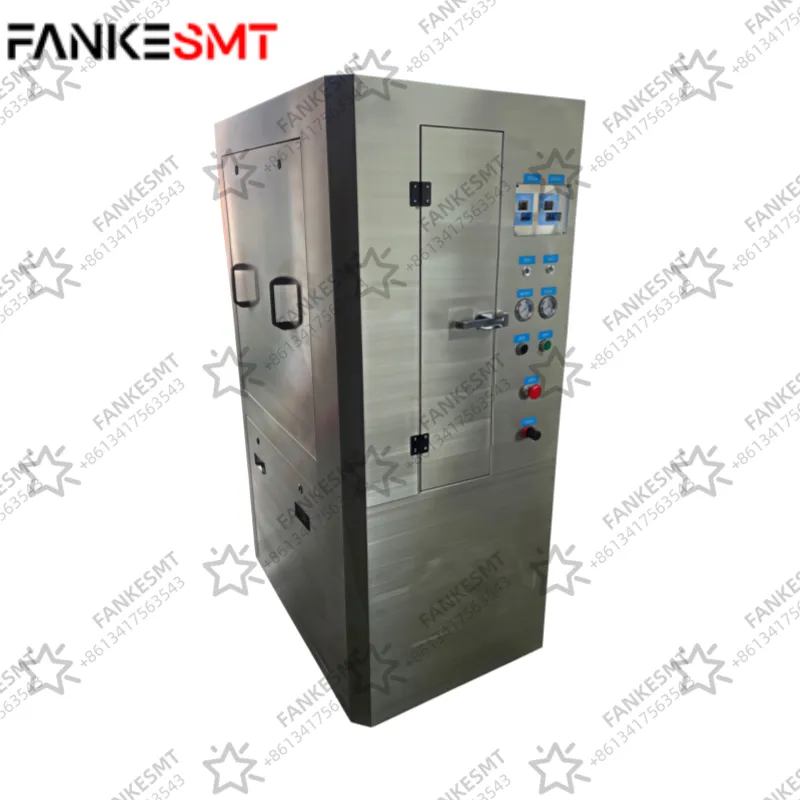
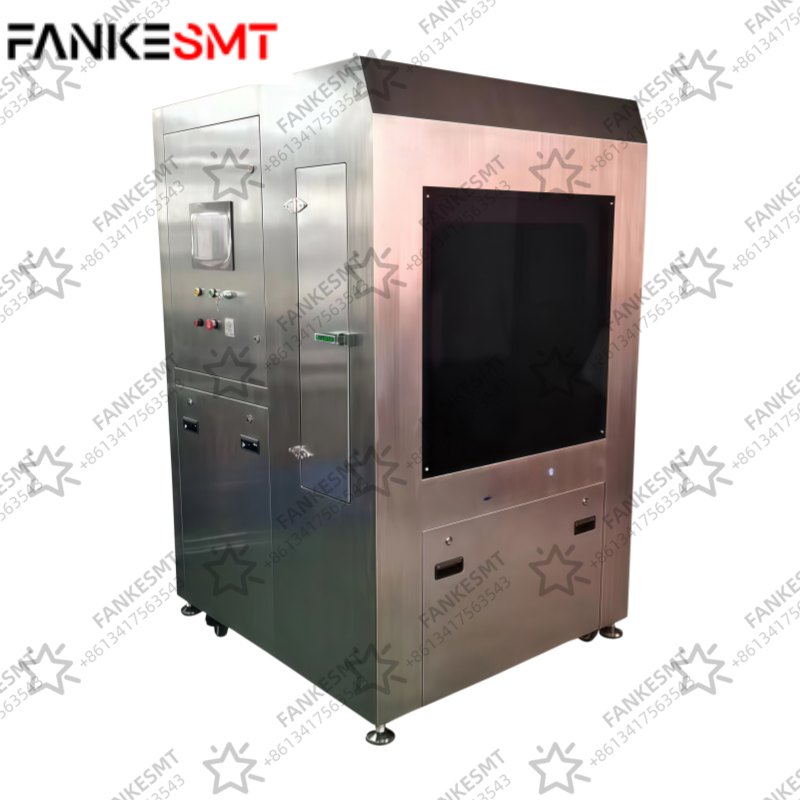
Stencil Cleaning Machine in Electronics Manufacturing
The importance of a Stencil Cleaning Machine lies in its critical role in ensuring high-quality, reliable, and efficient printed circuit board (PCB) assembly—particularly in surface mount technology (SMT) production. Key reasons include:
Maintaining Print Quality:
Residue (e.g., solder paste, flux, dust) on stencils causes incomplete or inconsistent solder paste deposition, leading to defects such as insufficient solder, bridging, or misprints. Regular cleaning ensures precise, repeatable stencil apertures.
Preventing Defects & Rework:
Unclean stencils significantly increase defect rates (e.g., tombstoning, solder balls, open joints), raising rework costs and lowering first-pass yield.
Extending Stencil Life:
Automated cleaning reduces mechanical wear (vs. manual scrubbing) and prevents corrosive residue buildup, preserving stencil integrity and fine-pitch aperture accuracy.
Improving Process Stability & Traceability:
Modern stencil cleaning machines offer controlled parameters (temperature, solvent type, pressure, dwell time) and logging capabilities—supporting process validation, IPC-7527 compliance, and statistical process control (SPC).
Enhancing Operator Safety & Ergonomics:
Replaces hazardous manual cleaning with solvents and abrasive tools, reducing exposure to VOCs and repetitive strain injuries.
Improving Process Stability & Traceability:
Modern stencil cleaning machines offer controlled parameters (temperature, solvent type, pressure, dwell time) and logging capabilities—supporting process validation, IPC-7527 compliance, and statistical process control (SPC).
Supporting High-Mix, High-Volume & Miniaturized Production:
Essential for fine-pitch (e.g., 01005, 0.3 mm pitch), micro-BGA, and PoP assemblies where even sub-micron residues can cause failure.