
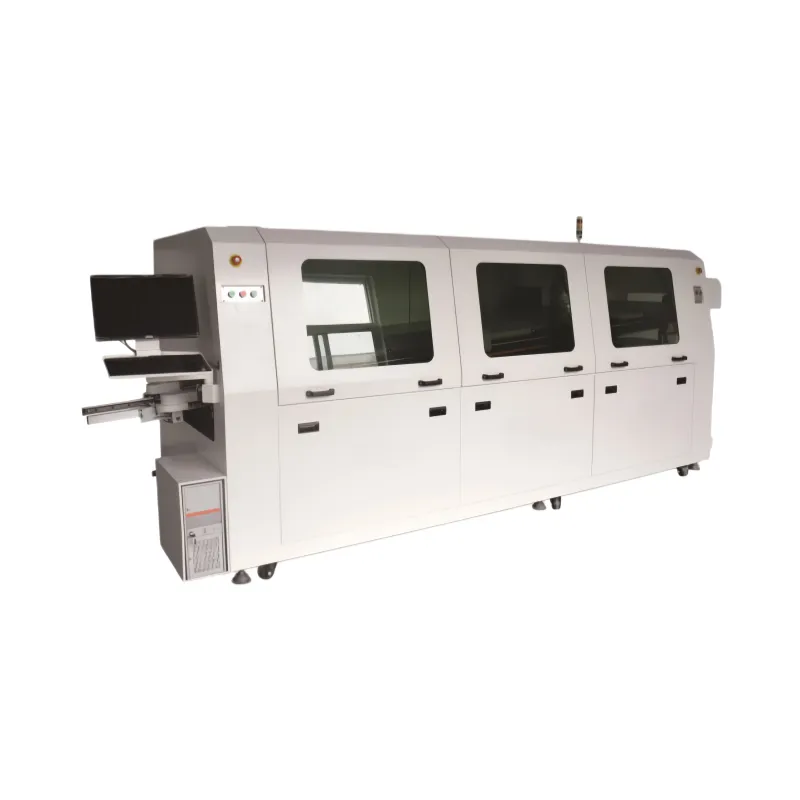
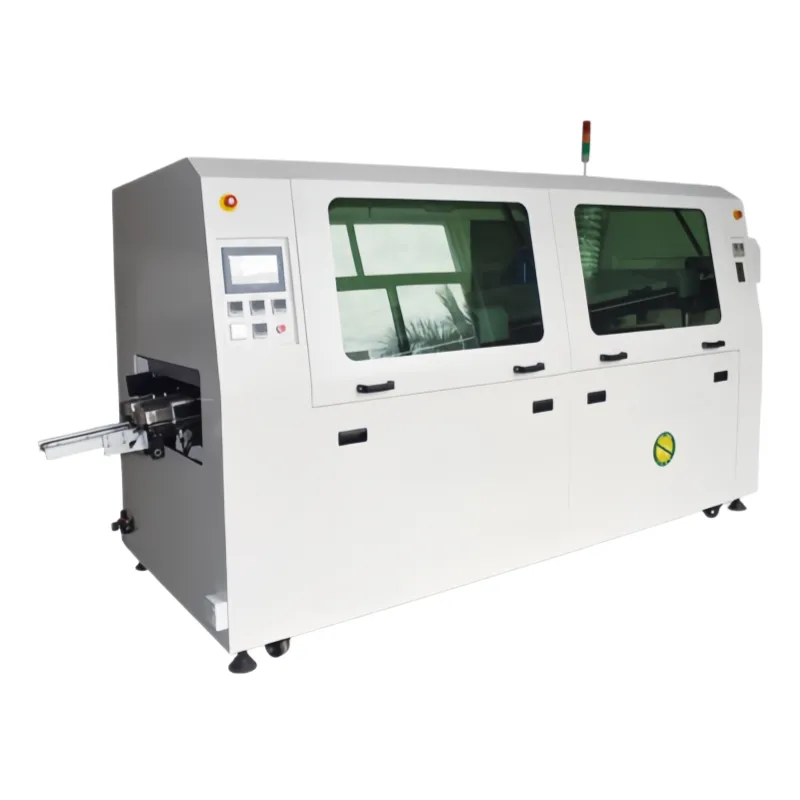
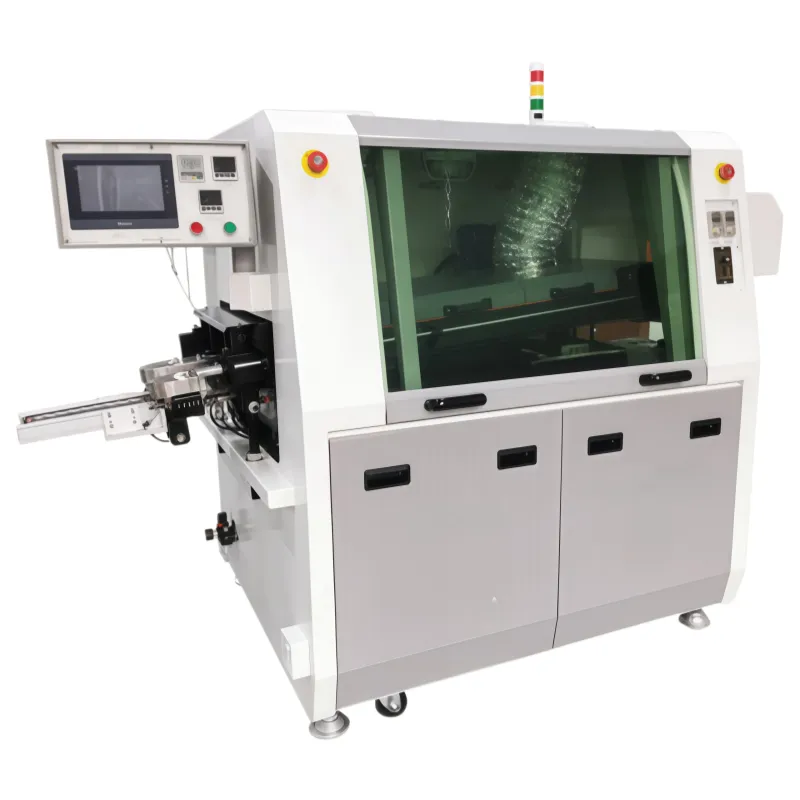
Wave Soldering Machine in Electronics Manufacturing
A Wave Soldering Machine is an industrial piece of equipment used in electronics manufacturing to attach electronic components to a Printed Circuit Board (PCB). It is specifically designed for high-volume, automated production.
How the Process Works
The machine works like a conveyor belt system that guides the PCB through four distinct stages:
Fluxing: The bottom of the board is coated with "flux," a chemical that cleans the metal surfaces and prevents oxidation, ensuring the solder sticks properly.
Preheating: The board is gently heated. This activates the flux and prevents the board from "thermal shocking" (cracking or warping) when it hits the hot solder later.
The "Wave": This is the core of the process. The board passes over a pump that creates a constant, standing "wave" of molten liquid solder. As the underside of the PCB brushes against this wave, the molten solder flows into the holes and around the component leads, forming strong electrical and mechanical bonds.
Cooling: As the board leaves the solder wave, it is cooled (usually by air fans), causing the solder to solidify and lock the components into place.
Why It’s Preferred
Efficiency: It is extremely fast, making it essential for mass-producing millions of devices.
Consistency: Because the process is automated and controlled by the machine (speed, temperature, wave height), it produces very uniform, reliable results compared to human hand-soldering.
Reliability: It ensures that solder penetrates deep into the "plated-through holes" of a circuit board, creating a very strong, durable connection that is resistant to vibration and heat.